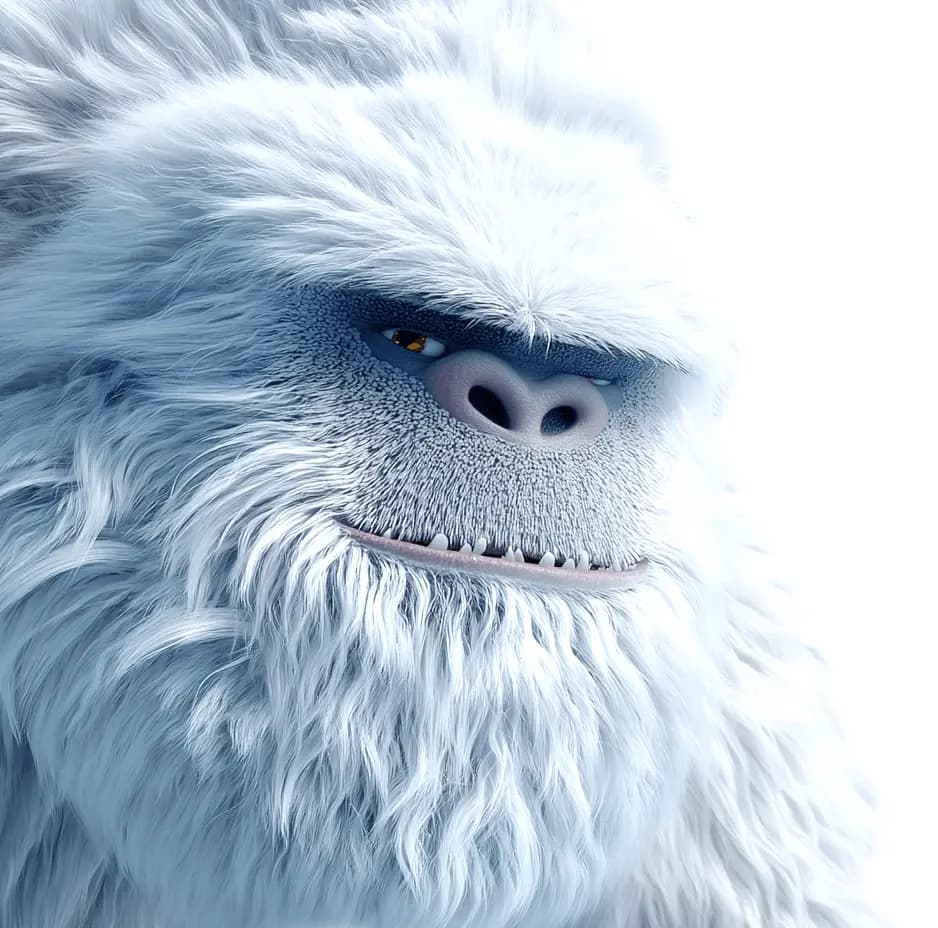

The difference between playing with AI and producing content that actually helps your business
Anyone can generate a caption, a clip or a visual in seconds now. The harder question was never whether it looks finished, it's whether it's actually a good idea.
of marketers already use AI to generate content (HubSpot, 2026)
of workers have received polished AI “workslop” that lacked substance (BetterUp & Stanford, 2025)
Everyone can press generate
The craft that used to separate a good creative team from an average one was execution: who could actually write the line, shoot the frame, design the visual. That barrier is mostly gone. A first draft of a script, a product image, a rough cut of a video concept: all of it can exist in the time it takes to make a coffee, and 55% of marketers are already generating content with AI somewhere in the process (HubSpot, 2026).
That's not a reason to be precious about the tool, it's a reason to be precise about where the actual craft now lives. Ahrefs analysed 900,000 newly published web pages and found that 74.2% already contain some AI-generated content, so producing at that pace is the baseline now, not something that makes a piece stand out (Ahrefs, 2025). A separate Ahrefs study of 600,000 pages found a correlation of just 0.011 between how much AI a page used and where it ranked on Google, essentially no relationship at all (Ahrefs, 2025). Execution stopped being the differentiator the moment everyone got the same tool. What's left is the harder stuff: the idea, the eye, the taste, the audacity, and the creative instinct to know when to push something further.
Playing with AI starts with a prompt. Good content starts with a strategy.
A prompt describes an output. A creative brief describes an intention: what story is actually being told, what tone it's told in, what makes it recognisably this brand and not a template with a logo swapped in, and what has to be true about the finished piece for it to be worth making at all. A creative director isn't in the room to write a cleverer prompt. They're there to decide the angle before anyone touches a tool: is this a joke or a confession, does the visual lead or does the copy, what's the one image or line the whole piece has to earn.
Skip that decision and AI will still hand you something finished-looking that answers none of it, because a model has no opinion on whether an idea is worth having in the first place. That gap is visible in how much gets redone afterwards: only 7% of marketers publish AI-generated content exactly as it comes out, while 56% say they significantly rewrite or completely change it before it goes live (HubSpot, 2026). Most of that isn't proofreading, it's someone finally making the creative decision the draft never had. Deciding the idea first means making that call once, instead of re-arguing it with every generic draft that comes back.
Looking good isn't the same as being good
AI is very good at producing something polished. Polished is a production quality. Good is a creative one, and the two aren't the same thing: a caption can be grammatically flawless, a video can be smoothly graded, and both can still be forgettable, the kind of piece that could sit inside any brand's feed because no specific creative decision was made about it.
This has a name now, and creative teams are the ones cleaning it up. Researchers at BetterUp Labs and Stanford's Social Media Lab found that 41% of employees have received AI-generated output that looked complete but lacked real substance, colleagues have started calling it “workslop,” and each instance costs close to two hours of rework to fix (BetterUp Labs & Stanford, 2025, via Harvard Business Review). Our previous article, AI campaigns that work started with a human idea, walked through why this splits so cleanly in practice: Heinz's “A.I. Ketchup” and Coca-Cola's “Create Real Magic” both started from a specific creative bet a human team made and then used AI to execute it, while J.Crew, Shein and Skechers let the tool run without that layer, and the visible flaws (a foot bent the wrong way, a generic billboard figure) became the story instead of the product. A concept has a point of view. A generation has none until someone gives it one.
Your brand is harder to replicate than you think
Getting one image to look roughly on-brand is a fair ask for any AI tool. Holding the same visual language, tone, rhythm and personality across a full campaign, dozens of pieces, several formats, weeks of output, is a different, much harder problem, and it's usually the first thing to slip once volume goes up, especially once several people, or several tools, are producing pieces in parallel without one eye checking all of them against each other.
A brand's visual and verbal identity isn't a set of rules a model can be handed once and trusted to keep. It's closer to a world someone has to keep recognising, piece by piece: the crop that's too tight, the joke that's slightly off-key, the colour that's technically on-brief but wrong for the mood. That's a creative call every time, not an administrative one, and the more a brand publishes, the more often someone has to make it correctly.
Generating content isn't directing a campaign
A campaign isn't a pile of assets that happen to share a colour palette. It's a concept, an art direction, a tone of voice, a sequence, all built so that piece two makes more sense because of piece one. Generating ten videos is a production task. Deciding what those ten videos need to say individually, in what order, how the visual world holds together across all of them, and which shot earns the next one, is direction, and no prompt does that on its own.
Coca-Cola's “Create Real Magic” is worth a second look here. The brand didn't hand OpenAI's platform to the public and hope for the best: thirty selected artists were flown to Atlanta for a creative academy specifically so a person, not a prompt, would decide what the campaign's output should look like before any of it reached a customer (The Coca-Cola Company, 2023). That's art direction doing the thing a generation tool can't: making a hundred separate outputs read as one deliberate world instead of a hundred separate guesses.
The human advantage is judgment
AI's real output isn't content, it's options. Ten headlines, six visual directions, three edits of the same cut. What happens next is a creative call: which of those actually says something, which ones are technically fine but flat, which don't sound like this brand at all, and which shouldn't see daylight regardless of how clean the render is. That's creative instinct, and instinct is the part AI still can't do.
The cost of skipping that call is now visible to the people looking at the work. In Animoto's 2026 State of Video Report, 83% of consumers said they'd noticed a brand video they suspected was AI-generated, and 36% said that noticing lowered their trust in the brand behind it (Animoto, 2026). Consumers pointed to the same tells any trained eye would catch first: unnatural movement, flat emotional tone, a generic quality that reads as nobody having looked at it before it went live, the exact problems reviewers flagged in J.Crew's, Shein's and Skechers's publicly criticised 2025 campaigns (eMarketer, 2025). None of those brands hid that they'd used AI. What was missing, in every case, was a creative eye with the authority to say “this isn't ready” before the public did.
AI changed what you're paying an agency for
Nobody needs convincing to hire a creative team just to press a button they could press themselves, that was never the pitch, and AI made it an impossible one to make honestly. What AI did do is make it obvious what the fee was actually for all along: not the hours spent typing or rendering, but the idea worth scaling, the direction that keeps a hundred assets feeling like one world, and the judgment that decides what's good enough to put the brand's name on and what isn't.
AI makes a creative team faster and able to produce far more than it could two years ago. It doesn't make the thinking behind that production optional, and every brand that skipped it in 2025 found that out in public, at scale. The practical next step isn't to use AI less, it's to make sure a concept exists before a single asset gets generated. That's the gap Yetiman's Marketing & AI Opportunity Audit is built to close, an honest read on where a brand's positioning, content and AI use actually stand before scaling anything further, and it's also why the AI Content Creation package builds creative review and two rounds of revisions into every piece instead of shipping the first draft a model produces.
Sources
- Ahrefs (2025). “74% of New Webpages Include AI Content (Study of 900k Pages).” ahrefs.com/blog/what-percentage-of-new-content-is-ai-generated
- Ahrefs (2025). “AI-Generated Content Does Not Hurt Your Google Rankings.” ahrefs.com/blog/ai-generated-content-does-not-hurt-your-google-rankings
- HubSpot (2026). “AI in Content Marketing: How Creators and Marketers Are Using AI to Speed Up and Succeed.” blog.hubspot.com/marketing/ai-in-content-marketing
- BetterUp Labs & Stanford Social Media Lab (2025), as reported in Harvard Business Review, “AI-Generated ‘Workslop’ Is Destroying Productivity.” hbr.org/2025/09/ai-generated-workslop-is-destroying-productivity
- Animoto (2026). “2026 State of Video Report.” businesswire.com – 83% of Consumers Can Spot AI Videos
- The Coca-Cola Company (2023). “Coca-Cola Invites Digital Artists to ‘Create Real Magic’ Using New AI Platform.” coca-colacompany.com/media-center
- EMARKETER (2025). “J.Crew, Shein, Skechers Slammed for Flawed AI Ad Campaigns.” emarketer.com/content/j-crew--shein--skechers-slammed-flawed-ai-ad-campaigns
FAQs
No. Ahrefs found essentially no correlation (0.011) between how much AI a page uses and its Google ranking (Ahrefs, 2025). What hurts results is a generic idea, whether a human or an AI wrote it.
If drafts keep coming back needing a full rethink rather than a light polish, the issue sits upstream of the AI tool, in the concept itself. Most marketers already work this way: only 7% publish AI drafts unedited, and 56% rewrite substantially (HubSpot, 2026). Heavy, repeated rewriting is usually a sign the idea was missing, not that the model needs replacing.
Yes, with the right discipline. One clear idea stated in a single sentence, a simple visual and tone reference, and one person with final creative sign-off cover most of what a small operation needs before it scales content with AI.
The concept, the art direction, the consistency of a brand's world across every piece, and the judgment to reject what doesn't belong, all of which decide whether AI-produced content actually lands or just exists.
A focused audit, like Yetiman's Marketing & AI Opportunity Audit, typically maps positioning, competitors and AI opportunities within a few weeks, giving you a prioritised, creatively-led roadmap before a single asset goes into production.
Author

Ana Conde
Product Designer
Ana Conde is a Product Designer with 13+ years of experience working across digital products, brands, and platforms. She believes design should advocate for the user—creating digital experiences that don’t just look good, but work.